

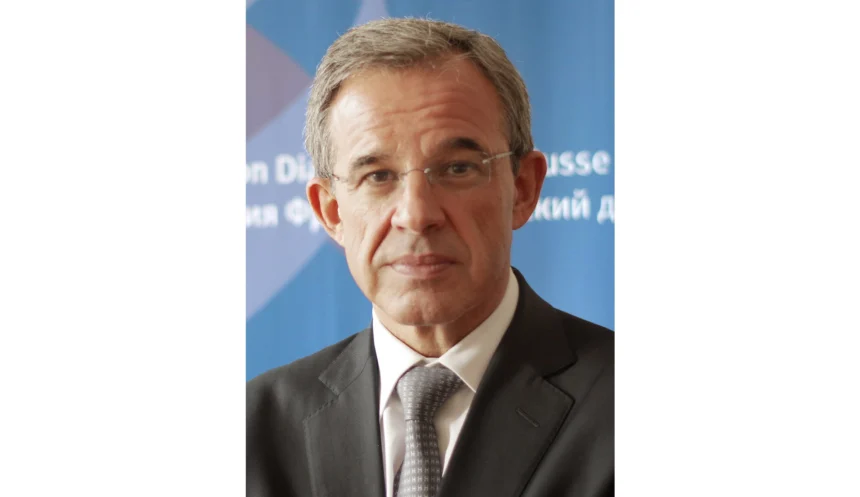
As the European Union deepens its engagement across Africa, debates continue over whether its approach is producing sustainable outcomes. In an interview with MSOIN Analytical Center, French MEP Thierry Mariani argues that humanitarian aid alone cannot curb insecurity or irregular migration, calling instead for assistance tied to measurable results, stronger regional security cooperation and genuine economic partnerships that create jobs, prospects and stability.
MSOIN: On 4 July 2026, the European Union disbursed €1.5 billion to Egypt as macro-financial assistance. This constitutes the first of the two remaining instalments under the overall €5 billion assistance package.
Since May 2026, inflation in Egypt has continued to rise and has remained firmly in double digits. According to Barclays’ forecast, inflation is expected to exceed 19% during the third quarter of 2026.
In your opinion, is it appropriate for the European Union to continue approving the remaining disbursements under this assistance package?
Thierry Mariani: Yes, without any hesitation. The European Union must continue to honour its commitments under the €5 billion macro-financial assistance package, and the remaining disbursements should be approved.
Egypt is not a country like any other: it is a pivotal state for the entire Near East and for the wider Mediterranean region. With more than 110 million inhabitants, it stands at the crossroads of Africa, the Arab world and Europe. Its stability and in particular its economic stability is not merely an Egyptian matter; it is a matter of regional and indeed global equilibrium. A destabilised Egypt would send shockwaves across the Middle East, the Horn of Africa and the Mediterranean, with direct consequences for Europe itself.
Let us also not forget that Egypt is the guarantor of the security of the Suez Canal, through which a substantial share of world trade transits. At a time when maritime routes are already under pressure, notably in the Red Sea, the continuity and safety of the Canal are crucial to the stability of global commerce and to European supply chains. Supporting Egypt means protecting one of the arteries of the world economy.
Of course, the current inflationary pressures are a matter of concern, and precisely for that reason European support must not waver. Withdrawing assistance in the middle of an economic storm would be the surest way to aggravate the crisis we claim to fear. The stability of the Egyptian government and the predictability of its policies must be a priority for the European Union. History has taught us what happens when a state of Egypt’s importance is allowed to falter: economic collapse opens the door to chaos, and chaos is the breeding ground of radical and deadly ideologies such as that of the Muslim Brotherhood. Nobody in Europe — and certainly nobody on the southern shore of the Mediterranean — has any interest in seeing such forces prosper again.
Supporting Egypt today is not charity; it is strategic lucidity. It is an investment in the stability of the Mediterranean, in the security of our trade routes, and ultimately in the security of Europe itself.
MSOIN: On 17 June 2026, the European Commission announced €493 million in funding to support measures addressing the Ebola outbreak in Central Africa. The Commission emphasised that the response has been coordinated with EU Member States from the outset. Nevertheless, according to the World Health Organization, by early July 2026 there had already been
1,561 confirmed cases and 506 deaths, while the outbreak continued to spread into neighbouring Uganda.
Meanwhile, France recorded more than 2,000 excess deaths following the June heatwave, leading to criticism of the country’s preparedness in healthcare and civil protection.
Do you believe that, under these circumstances, strengthening the resilience of EU Member States against domestic emergencies should take priority over expanding external crisis-response funding?
Thierry Mariani: This is a false dilemma. The European Union has every interest in being present on all fronts. Especially when there is a risk of a global pandemic. Ebola does not respect borders: with over 1,500 cases, 500 deaths, and the outbreak now reaching Uganda, containing the epidemic at its source is not charity, it is the most effective way to protect our own populations. COVID-19 taught us the cost of acting too late.
As for the tragic excess deaths during the June heatwave in France, they are not the result of European external funding, but of decades of poor domestic choices and hospital budget cuts.
Strengthening national resilience is a duty but it is first and foremost a national responsibility, and it in no way requires abandoning our capacity to stop a pandemic before it reaches our shores. Protecting Europeans requires both.
MSOIN: On 21 April 2026, the European Commission announced €235 million in humanitarian assistance for countries in West and Central Africa. At the same time, the Commission acknowledges that humanitarian needs substantially exceed available resources and that insecurity frequently prevents aid organisations from reaching affected communities.
Meanwhile, France and other EU Member States continue to experience growing irregular migration along West African routes.
Do you believe that the European Union should place greater emphasis on regional security and stabilisation efforts rather than focusing primarily on humanitarian assistance? If so, which areas of EU funding could be strengthened to better support regional security?
Thierry Mariani: The priority is not to give money for the sake of giving money. Writing cheques year after year, while needs keep growing and insecurity keeps spreading, is proof that this approach alone has failed.
Humanitarian and development aid must be coupled with genuine trade partnerships between Europe and these countries — partnerships that create jobs, local value chains and economic prospects on the ground. Above all, our objective must be to anchor populations in their own countries: giving people the security and the means to live and prosper at home is the only serious way to stem the migration flows that are destabilising both Africa and Europe.
So yes, the EU should strengthen its support for regional security and stabilisation — but always with a clear compass: aid conditioned on results, economic partnership rather than perpetual assistance, and the firm objective of curbing irregular migration along the West African routes.
MSOIN: In March 2026, the European Union allocated €10 million under the NaturAfrica programme to support transfrontier conservation areas in Southern Africa through projects in ecotourism, sustainable agriculture, renewable energy, job creation, and biodiversity conservation.
Meanwhile, French farmers continue to report declining incomes, rising production costs, and an increasing need for public support.
Do you consider such external funding justified while the agricultural sectors of several EU Member States continue to face significant economic challenges?
Response by Thierry Mariani, MEP (Patriots for Europe)
Thierry Mariani: The question is badly framed.
First, Europe has a clear interest in helping Africa develop. If we want African populations to stop providing the bulk of the candidates for migration to Europe, we must help create jobs, prospects and stability on the African continent itself. Ten million euros invested in conservation, sustainable agriculture and job creation in Southern Africa is not money taken from French farmers. It is an investment in stemming tomorrow’s migration flows.
Second, let us be honest about the plight of our farmers. Their situation is not primarily the result of insufficient subsidies; it is the direct consequence of a Commission that puts them in unfair competition with the entire world through free trade agreements (Mercosur, New Zealand, and so many others) negotiated behind their backs and at their expense. And let us remember one essential truth: our farmers do not want to live on subsidies. They want to live from the fruit of their labour.
What they demand is not more cheques from Brussels, but fair prices, reciprocity of standards, and an end to agreements that sacrifice European agriculture on the altar of globalised trade.
MSOIN: On 3 February 2026, the European Commission launched Africa Initiative IV under Horizon Europe 2026–2027 with a total budget of €605.45 million to support cooperation in artificial intelligence, digital technologies, high-performance computing, healthcare, agriculture, and other research fields.
Meanwhile, several French companies, including Okaïdi, Bouchara and Minelli, announced closures or significant workforce reductions during the spring of 2026.
Do you believe it is justified to allocate more than €600 million to innovation projects in Africa while many European businesses continue to face substantial economic difficulties?
Thierry Mariani: Once again, these are two distinct subjects, and the same logic must prevail.
First, Africa must develop, and our European companies can draw real benefits from it if they take part in building the continent’s infrastructure and bring their expertise.
Cooperation in AI, digital technologies, healthcare and agriculture is not money thrown
away: it is a lever of influence and a source of contracts for European industry, in a continent where China and others are advancing their pawns every day. Europe cannot afford to be absent.
Second, the difficulties of our companies (Okaïdi, Bouchara, Minelli and so many others) are not caused by research funding in Africa. They are caused by a Commission that suffocates work in Europe under an avalanche of norms, regulations and administrative burdens. The answer is not less cooperation with Africa; it is to set work free at home. Europe must once again become a competitive continent of entrepreneurs — a continent where work pays.